Friday, 8 March 2019

Thursday, 7 March 2019
Tuesday, 5 March 2019
D83
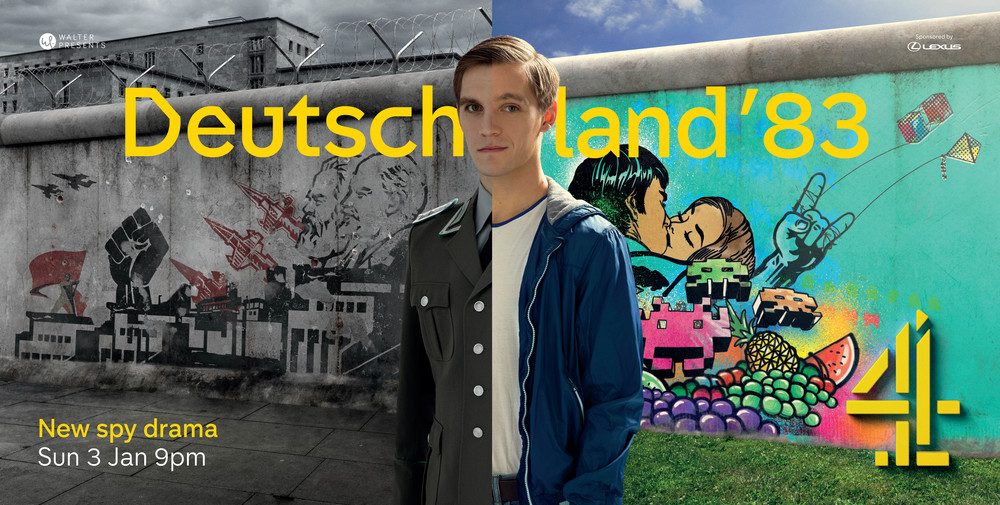
WEST:
peace hand gesture- peace and love
kite- freedom
fruit & space invader- western technology and varied and exotic fruit
green, grass, colourful- freedom, love and prosperity
plain white tee, normal clothes- freedom of choice
EAST:
barbwire- controlled
hand in a fist gesture- anger and power
Lenin and Marks- founders of communism
concrete rigid linear structure- confined within the walls of the community
uniform and pale- lack of sun in the East and no freedom of choice
MARTIN/ STAMM:
eye level- allows audience to connect with the character
in the center thirds- shows his importance
both sides have the same font- yellow suggests that both sides are happy
spy genre- audience
Friday, 8 February 2019
ST essay 15/02/2019

Tuesday, 5 February 2019
Monday, 4 February 2019
Media Essay- ST
How are different social
groups represented in the sequence you have analysed? What role does the use of
media language, signs and signifiers have in constructing and presenting these
representations as real?
Throughout the long form TV drama, Stranger Things, the teenage boys
play a large role in the story line. The social group ‘Teenagers’ are
represented strongly throughout the show and are the basis for the series. The
opening episode follows the story of the four pre-teen boys, Mike, Dustin, Will
and Lucas, playing dungeons and dragons, an action/ adventure game played by
the boys in Mike’s basement, in marked contrast to the other teens, Nancy,
Jonathon and Steve who all fit their stereotypes. The four boys are represented
as nerdy, smart and excitable pre-pubescent pre-teens. Media language has a
significant role as it allows the audience to create a representation of the
four friends (Mike, Will, Lucas and Dustin) through the use of mise-en-scene. The
boys are wearing mostly typical set to the era ST is set around, the 1980’s,
allowing the episode a cultural zeitgeist, and have a real passion of the game
(Dungeons and Dragons), one that doesn’t appear to be a common game played by
other ‘typical’ teens, clearly shifting the audiences idea of the boys of being
typical teens as young and naive but sophisticated as the game took Mike “ 2
days to set up” and it was a “10 hour” campaign. The boys use derogative
language such as “pussy” to one another, which reinforces their age to the audience,
as this sort of language is commonly used by pre-teens but also is not used by
other characters in the first episode. As well as this, the use of the word “pussy”,
used by Lucas, supports the stereotypical representation of the social group ‘Teens’
as derogative language often gets used by teens and pre-teens when surrounded
by similar characters to themselves as they feel a sense of power in using such
language. However, later on in the episode we see the boys again they support
the representation of their social group as they are seen as loyal, caring
friends searching for Will and are some of the main characters forcing the
search for Will Byers.
Another social group that is represented in the first episode of ST, is
the police force. The police force is shown as typically lazy, useless and
unhelpful, shown through the use of props and setting that can indicate this to
the audience. For example, we see Hopper turn up late to work, then moves onto
eating a donut whilst his colleagues play card games around him, reinforcing
the social stereotype of police force being lazy and laid back. This is shown
through the slow pan of the camera to portray a calm and laid-back environment contradicted
by the job role of the characters being shown, and that ‘nothing serious’
happens in Hawkins. These stereotypical features of police can be seen in many
other programmes and films such as the Simpsons and has intertextuality with
the famous donut in the Simpsons and the donut that Hopper is seen eating in
the first episode. This constructed representation is encoded into the episode so
audiences can quickly see and understand what sort of characters we will be
dealing with. Overall helping the relatability of them which will then allow
the audience to connect more with them as they feel a connection and that they
can relate to them too.
Narrative
Narrative-Is a structure or chain of events in which a story is told.
Its carefully considered when writing screenplay for a drama which is then visually achieved through the editing of different shots put together.
Why is narrative important?
Why is narrative important?
- Narrative provides a structure chosen to directly affect how the audience experiences the story.
- The way the story is told can provide certain messages and values about who we see and what is being said.
- It can affect the audiences involvement with and the enjoyment of the drama.
- Narrative in LFTVD is complex with multiple narrative strands and story lines.
Types of narrative structure
Linear narrative - a clear beginning, middle and end. Chronological time frame. Action A leads to action B etc.
Fragmented Narrative (non-linear) - a disrupted or disjointed time lapse. Events/actions shown out of chronological order. This narrative technique is used to help show parallel (supernatural) worlds which can also closely replicate the ways in which the human mind works. Audience participation to try and piece together the story themselves which makes it more interactive.
Narrative structure answer example
Stranger things employs a fragmented narrative because right from the start we witness multiple parallel plot lines such as the laboratory, Eleven and the boys. We are also provided with a non-chronological narrative strand in the flashback to Joyce and Wills conversation in castle Byers. The fragmented narrative is an enigma and questions for the audience, who have to work to figure out the connection, therefore ensuring greater audience engagement within the episode.
Types of narrative
Restricted narrative - We as an audience experience the sense and thoughts of just one character (always mostly just focused on the protagonists story line). Narrative cannot tell the audience things that the main character does not know.
Omnipresent narrative - A panoramic, view of the world not just one, provides point of view for many characters, helps audience see a broader background and is used for telling stories.
Narrative answer example
The omnipresent narrative provides multiple gratifications for the audience - we can emphasize and identify with some characters, while gaining escapism and mystery from others.
Types of narrative endings
Closed endings - TV dramas traditionally feature one characters story or point of view in an episode, which comes to a resolution at the end. Characters story can exist as one unique story in one episode. Story unraveled before an audience, bought to a conclusion at end of episode.
Open endings - Episode ends on cliff-hanger. Story-telling technique. In films open endings can be unsatisfying for audiences. Allows continuation of the story. Open ending encourages viewer to continue watching (binge).
Theorist's
TODOROV: Equilibrium theory
Narrative is chronological and has a linear sequence of themes.
1. equilibrum (Harmony/exposition)
2. disequilbrium (Downfall/introduction of conflict)
3. recognition (climax)
4.resolution (restore)
5. new equilibrium
STRAUSS: Binary oppositions
We understand the world by the relationship two opposites have together. Narratives arranged around conflict of binary oppositions e.g. man VS woman.
Restricted narrative - We as an audience experience the sense and thoughts of just one character (always mostly just focused on the protagonists story line). Narrative cannot tell the audience things that the main character does not know.
Omnipresent narrative - A panoramic, view of the world not just one, provides point of view for many characters, helps audience see a broader background and is used for telling stories.
Narrative answer example
The omnipresent narrative provides multiple gratifications for the audience - we can emphasize and identify with some characters, while gaining escapism and mystery from others.
Types of narrative endings
Closed endings - TV dramas traditionally feature one characters story or point of view in an episode, which comes to a resolution at the end. Characters story can exist as one unique story in one episode. Story unraveled before an audience, bought to a conclusion at end of episode.
Open endings - Episode ends on cliff-hanger. Story-telling technique. In films open endings can be unsatisfying for audiences. Allows continuation of the story. Open ending encourages viewer to continue watching (binge).
Theorist's
TODOROV: Equilibrium theory
Narrative is chronological and has a linear sequence of themes.
1. equilibrum (Harmony/exposition)
2. disequilbrium (Downfall/introduction of conflict)
3. recognition (climax)
4.resolution (restore)
5. new equilibrium
STRAUSS: Binary oppositions
We understand the world by the relationship two opposites have together. Narratives arranged around conflict of binary oppositions e.g. man VS woman.
Thursday, 31 January 2019
LFTVD
VOCAB:
VOD = Viewing on demand
SVOD = Streaming
Easter eggs = cross references so super-fans notice
DVR = Digital video recording
Binge-watch = to watch multiple episodes of (a television programme) in rapid succession, typically by means of DVDs or digital streaming
State of the nation = whats going on at the moment of release that could have an effect on how the programme is received
Cultural Zeitgeist = Zeitgeist is defined as the spirit of a generation or a period of time. An example of zeitgeist is the free love and progressive thinking of the 1960s, this time period can resonate with the current day for a programme to sell e.g. Stranger Things is set in the 80s which people of today enjoy viewing
Constructed realism = the way in which it's media product uses the technical elements and what we see/media language to make the audience feel a certain way
Dominant ideology = a system or structure of beliefs/values/ideas about the way in which we should live, behave and think in any given society
LFTVD:
Each episode lasts from 45 minutes to an hour.
American Network broadcasters must satisfy their advertisers and hold a market share- this is the equivalent of Freeview
American Cable TV, HBO was the first US national subscription cable TV channel in 1970s - can take more risks. This is the equivalent of Sky or Virgin.
Trouble with UK TV drama - failed to meet the challenge of US cable channels to move to long-form, with their risk-taking content and style.
ABC1 audience means higher paid advertising
Subscription VOD (Viewing on demand)
-Content viewing via a TV still dominates in UK
-Growth of SVOD (streaming) web based channels such as Netflix, Amazon Instant Video and Now TV is considerable.
Audiences
-Rise of binge watching started with DVD in late 90s/early c21
-US long form drama often uses EASTER EGGS and mid season breaks to generate fan intensity and maintain media profile
Easter eggs - cross refernces so super fans notice
Why do audiences love LFTVD?
Subscription - Sky, Virgin
Streaming - Netflix, Amazon Prime
LFTVD can be any genre from crime to romance to comedy and mystery, narratives can be on any subject and themes can be hard-hitting like racism and grief but can also be inclusive of love and family.
Production values: $3-4million per episode
Top 3 ways of watching TV
Terrestrial: First 5 channels (more regulation, follow a PSB)
Cable: Sky, Virgin
Streaming: Netflix, Amazon Prime
Exam: Paper 2
30 marks - 45 minutes
10 marks - 15 minutes
TV drama needs:
VOD = Viewing on demand
SVOD = Streaming
Easter eggs = cross references so super-fans notice
DVR = Digital video recording
Binge-watch = to watch multiple episodes of (a television programme) in rapid succession, typically by means of DVDs or digital streaming
State of the nation = whats going on at the moment of release that could have an effect on how the programme is received
Cultural Zeitgeist = Zeitgeist is defined as the spirit of a generation or a period of time. An example of zeitgeist is the free love and progressive thinking of the 1960s, this time period can resonate with the current day for a programme to sell e.g. Stranger Things is set in the 80s which people of today enjoy viewing
Constructed realism = the way in which it's media product uses the technical elements and what we see/media language to make the audience feel a certain way
Dominant ideology = a system or structure of beliefs/values/ideas about the way in which we should live, behave and think in any given society
LFTVD:
Each episode lasts from 45 minutes to an hour.
American Network broadcasters must satisfy their advertisers and hold a market share- this is the equivalent of Freeview
American Cable TV, HBO was the first US national subscription cable TV channel in 1970s - can take more risks. This is the equivalent of Sky or Virgin.
Trouble with UK TV drama - failed to meet the challenge of US cable channels to move to long-form, with their risk-taking content and style.
ABC1 audience means higher paid advertising
Subscription VOD (Viewing on demand)
-Content viewing via a TV still dominates in UK
-Growth of SVOD (streaming) web based channels such as Netflix, Amazon Instant Video and Now TV is considerable.
Audiences
-Rise of binge watching started with DVD in late 90s/early c21
-US long form drama often uses EASTER EGGS and mid season breaks to generate fan intensity and maintain media profile
Easter eggs - cross refernces so super fans notice
Why do audiences love LFTVD?
- High quality drama
- Multiple episodes/hours/years
- Content can be dark/difficult but innovative
- Now attracts some of the best/innovative writers/actors
- Time shifting (record and watch another time-control when you watch DVR)
- Easily accessible
- Keeps people invested
- Creativity
- Characters change in ways that are surprising
- It allows to shows to play with theme and character development in unique ways
Subscription - Sky, Virgin
Streaming - Netflix, Amazon Prime
LFTVD can be any genre from crime to romance to comedy and mystery, narratives can be on any subject and themes can be hard-hitting like racism and grief but can also be inclusive of love and family.
Production values: $3-4million per episode
Top 3 ways of watching TV
Terrestrial: First 5 channels (more regulation, follow a PSB)
Cable: Sky, Virgin
Streaming: Netflix, Amazon Prime
Exam: Paper 2
30 marks - 45 minutes
10 marks - 15 minutes
TV drama needs:
- Location (various)
- Stock characters
- Multiple narratives
- 1 hour episodes
- Cliff hangers
- High production value
- Has a number of episodes to help create narrative

Representation
Absent Fathers:
This is an important theme as it is represented by several characters. Firstly, from the first scene of Joyce and Jonathan when they realise that Will is missing, you can see straight away that there is no father figure in the house. This is important when it comes to searching for Will, as when Hopper queries if Will could be with his dad, Joyce is confident that he won’t be there as he has no part in Wills life, as Jonathan is the father figure for Will. The other main way this is shown is through eleven. Although she knows her father (‘papa’), he is not acting as a proper father figure towards him. He is keeping her locked up like an experiment, even though she persists to call him papa. Finally, Mikes dad shows absenteeism even though he is present in his day to day life. He shows lack of care and consideration to his children.
Family Life and Relationships:
Relationships is a very important aspect in Stranger Things. Not only romantically, but also friend relationships. Without the friendship shown in the series, they would not be able to discover what has happened to Will. Friendship is used to show that sticking together can be used as a strength in order to save Will. Family life is also a very prominent theme within the first episode. Families are created within the series, not only by blood but with strong friendship bonds. Family life is highlighted when eleven is abandoned and has no family to look after her. She is taken in by Mike and he and the boys become a family to her as she has no one else.
Mothers:
Wills mum is one of the most important characters as she is a huge part of the main story-line. The theme of mothers is shown almost entirely the way through between Will and his mother when he goes missing and she goes through anything to get him back. Joyce is presented at the beginning as a careless mother, however as the episode progresses you see that she cares deeply for her children. The theme of mothers is important as they are often represented as being weak and soft. In Stranger Things, especially the first episode, you see a counter-type of this immediately from Wills mother. As a single, working class mother she shows that she is strong willed and focused on finding her son, she doesn’t come across as weak, and she shows this through her actions when searching for him.
Government:
In the first episode of Stranger Things, the government is a main theme. This is shown straight away as the first character to be shown is from the Governments lab. The government have control over everybody, and this is shown when the lady from the government shoots Benny when looking for eleven.
Teenagers:
In Stranger Things, teenagers play a big role in the story. Firstly, there are the main group of boys; Will, Mike, Lucas and Dustin. These are the boys who continue the story and are the main basis of it. Also, Jonathan, Barb, Nancy and Steve are a slightly older group of teenagers, who have their own story line within the story. The role of teenagers is important in the show as they show the difference between them and their parents. The teenagers being able to solve problems, show to the viewers that they are able to do the same thing as adults. There are examples of the teenagers acting as adults, for example Jonathan has stepped up and acts as the man of the house as their dad doesn’t live with them, so Jonathan is in charge of looking after Will, and also has to work in order for them to be able to afford their house etc.
Police:
Police is a key theme. One of the main characters, Hopper, is the police sheriff. Hopper begins as a stereotypical police man, however as his concern grows for Will, he turns into a counter-type of a policeman going above and beyond for his job. Police are important in this as they usually work for the government, where as they work against the government as they are the bad people. Without the police Will would not have been able to be found.
Narrative
Narrative is a structure/ chain of events in which a story is told. They are carefully considered when writing the screenplay and visually achieved through the editing of different shots. The narrative structure chosen directly affects how the audience experiences the story The story can provide certain messages and values It affects the audience's involvement and enjoyment LFTVD = complex, multiple narrative strands
Narrative Structure
Linear narrative- clear beginning, middle and end, chronological, A->B->C
Fragmented narrative- non-linear, disjointed, no clear beginning, middle and end, C->B->A, shows parallel stories, closely replicate the way that human mind works and the audience has to try harder
E.g. Stranger Things employs a fragmented narrative because right from the start we witness multiple parallel plot lines such as the laboratory, Eleven and the boys. We also see a non-chronological narrative strand in the flashback to Joyce and Will's conversation in Castle Byers. The fragmented narrative creates enigmas or questions for the audience, who have to work to figure out the connection, therefore ensuring greater audience engagement
Narrative Types
Restricted narrative - we experience the story through the senses and thoughts of just one character- the protagonist, narrative cannot tell the audience things the main character does not know
Omnipresent - a panoramic, all seeing, view of the world of the story, not just one characters point of view, helps audience see a broader background, there is a number of contexts
E.g. The omnipresent narrative provides multiple gratifications for the audience, we can emphasize and identify with some characters, while gaining escapism and mystery from others
Narrative Endings
Closed endings - one character's story which comes to a resolution at the end of the episode. Following ep. has a new story
Open endings - ends on a cliff hangers, story-telling technique, can be unsatisfying, encourages viewer to continue watching the serial
Theory
Todorov- Equilibrium theory
1. Exposition -> 2. Introduction of conflict -> 3. Climax -> Resolution
Strauss- Binary Opposites
We understand the world by the relationship that two opposites have together. Narratives are arranged around the conflict of binary opposites e.g. hot and cold, old and young
Narrative Structure
Linear narrative- clear beginning, middle and end, chronological, A->B->C
Fragmented narrative- non-linear, disjointed, no clear beginning, middle and end, C->B->A, shows parallel stories, closely replicate the way that human mind works and the audience has to try harder
E.g. Stranger Things employs a fragmented narrative because right from the start we witness multiple parallel plot lines such as the laboratory, Eleven and the boys. We also see a non-chronological narrative strand in the flashback to Joyce and Will's conversation in Castle Byers. The fragmented narrative creates enigmas or questions for the audience, who have to work to figure out the connection, therefore ensuring greater audience engagement
Narrative Types
Restricted narrative - we experience the story through the senses and thoughts of just one character- the protagonist, narrative cannot tell the audience things the main character does not know
Omnipresent - a panoramic, all seeing, view of the world of the story, not just one characters point of view, helps audience see a broader background, there is a number of contexts
E.g. The omnipresent narrative provides multiple gratifications for the audience, we can emphasize and identify with some characters, while gaining escapism and mystery from others
Narrative Endings
Closed endings - one character's story which comes to a resolution at the end of the episode. Following ep. has a new story
Open endings - ends on a cliff hangers, story-telling technique, can be unsatisfying, encourages viewer to continue watching the serial
Theory
Todorov- Equilibrium theory
1. Exposition -> 2. Introduction of conflict -> 3. Climax -> Resolution
Strauss- Binary Opposites
We understand the world by the relationship that two opposites have together. Narratives are arranged around the conflict of binary opposites e.g. hot and cold, old and young


Subscribe to:
Posts (Atom)
-
 Representations Stereotypes created: Frenchman-beret, moustache and baguette Inner city youth- drugs, alcohol and violence A Scottish pe...
 -
 D- escribe. I- n Detail. S- etting. T- hemes. I- cons. N- arrative. C- haracters. T- extual Analysis. this genre is hor...
